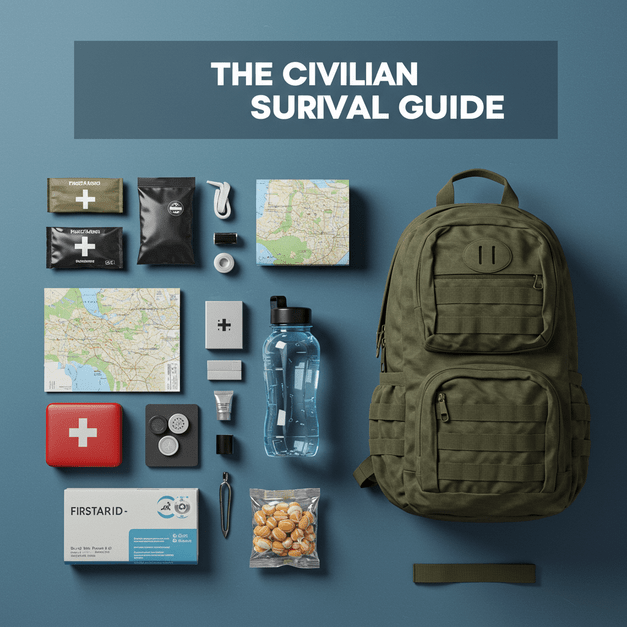
The thought of war reaching our communities is a source of deep anxiety and fear. It’s a normal human response to a threat that feels both immense and uncontrollable. But what if you could channel that fear into something productive? What if you could transform anxiety into a quiet confidence, knowing you have a plan, practical skills, and a resilient mindset? This guide is designed to do exactly that. It moves beyond simple checklists of gear to provide a calm, practical, and deeply researched framework for civilian safety. We will cover immediate actions for the first 72 hours, strategies for long-term sustenance and shelter, critical medical and psychological skills, and the communication lifelines that hold it all together. This is not about alarmism; it’s about empowerment.
Table of Contents
- The first 72 hours: your immediate action plan and go-bag
- Home fortification: how to make your house a safe shelter
- Long-term sustenance: stockpiling food, water, and hygiene supplies
- Essential medical skills: critical first aid when help isn’t coming
- The mental battlefield: building psychological resilience for survival
- Information and community: your lifeline in a crisis
- Frequently asked questions about civilian war survival
- From anxious to prepared: you have a plan
The first 72 hours: your immediate action plan and go-bag
When a crisis erupts, the first few days are the most chaotic. Panic is contagious, and indecision can be dangerous. A clear, pre-established plan is your primary tool for cutting through the noise and taking decisive, life-saving action.
Create your family emergency plan now
Before anything else, you need a plan. In a moment of crisis, this plan will be your anchor, reducing panic and ensuring everyone in your family knows what to do. A good plan has three core components:
- Defined roles and rally points: Who is responsible for grabbing the go-bags? Who handles the pets? Who checks on elderly neighbors? Assign these roles now. Establish a local rally point (e.g., the old oak tree at the end of the street) for immediate meet-ups and a regional rally point (e.g., a relative’s house in another town) in case of a wider evacuation.
- Communication tree: If phone lines are jammed, how will you confirm everyone is safe? A communication tree establishes a clear order of contact. For example, you call your parents, your spouse calls their parents, and then you both call an out-of-state relative who acts as a central information hub for the rest of the family.
- Physical and digital documents: Create a waterproof folder containing physical copies of passports, birth certificates, deeds, social security cards, and insurance policies. Scan these same documents and save them to a password-protected USB drive and a secure cloud service. As organizations like FEMA and Ready.gov consistently emphasize, having access to these documents is critical for recovery and accessing aid.
Assemble your essential 72-hour ‘go-bag’
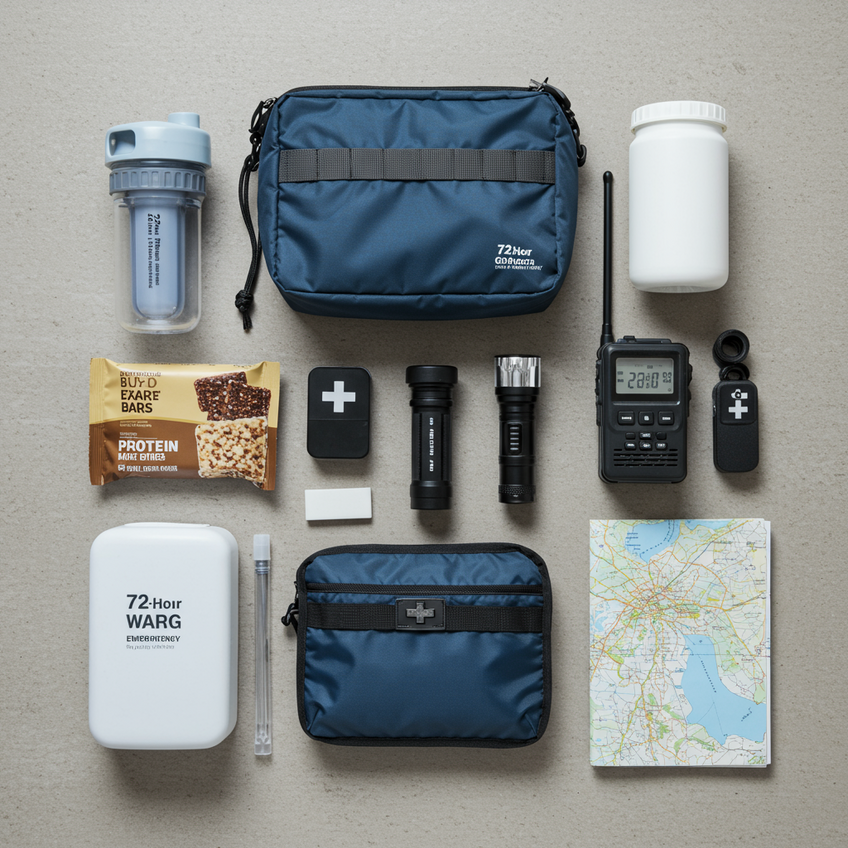
Your ‘go-bag’ or ‘bug-out bag’ is not a long-term survival kit; it’s a portable pack designed to sustain you for the first 72 hours of an emergency. This is the bag you grab when you need to evacuate now. Its contents should be based on the foundational recommendations for any building a disaster supplies kit, focusing on the absolute essentials.
Here is a prioritized checklist for your go-bag:
- Water: The absolute priority. Pack one gallon per person per day. A combination of water bottles and a portable filter is ideal.
- Food: At least a three-day supply of non-perishable, high-energy food. Think protein bars, dried fruit, nuts, and jerky. No cooking required.
- Communication & light: A battery-powered or hand-crank radio is your most reliable link to official broadcasts when the power is out. Pack a powerful LED flashlight and extra batteries.
- First-aid: A comprehensive first-aid kit that includes trauma supplies (more on this later).
- Signaling & navigation: A whistle to signal for help, and physical local maps of your area—do not rely on your phone’s GPS.
- Essential items:
- Cash (small bills)
- Multi-tool
- Duct tape
- Dust masks
- Wrench or pliers to turn off utilities
- Copies of personal documents (in a waterproof bag)
- Seasonal clothing and sturdy footwear
For a comprehensive list of items, the Red Cross survival kit checklist is an excellent resource.
Decide: evacuation vs. sheltering-in-place
This is one of the most critical decisions you will make. Your choice will depend on three factors: official guidance, your proximity to the danger, and the safety of your home.
- When to evacuate: If authorities issue an evacuation order for your area, leave immediately. Other clear signals to evacuate include imminent physical danger (advancing conflict, uncontrolled fires) or a compromised shelter (structural damage to your home).
- When to shelter-in-place: In many scenarios, especially those involving infrastructure collapse or widespread civil unrest, travel can be more dangerous than staying put. If your home is structurally sound and not in the direct line of fire, sheltering-in-place is often the default recommendation by emergency agencies. This minimizes your exposure to unpredictable threats on the road.
Home fortification: how to make your house a safe shelter
If sheltering-in-place is your plan, your goal is to make your home as resilient and low-profile as possible. This isn’t about building a bunker; it’s about smart, low-tech modifications to increase your safety.
Identify and prepare the safest room in your home
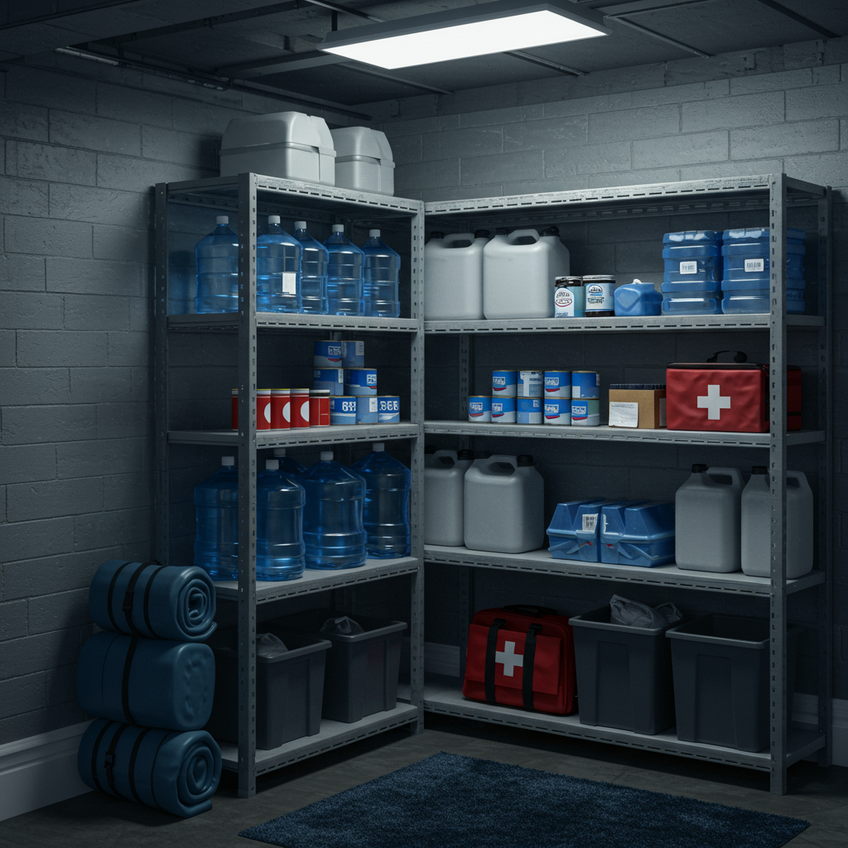
Your designated safe room is your shelter within a shelter. The ideal location is a basement or cellar. If you don’t have one, choose a central, interior room on the lowest floor with no windows and as few exterior walls as possible. This location maximizes the number of walls between you and the outside, offering better protection from blasts and projectiles.
Prepare this room ahead of time. Pre-stock it with your shelter-in-place supplies (a larger version of your go-bag). Have plastic sheeting and duct tape ready to seal the door and any vents to protect against airborne contaminants.
Low-tech methods to reinforce entry points and windows
Your home’s vulnerability to intruders is a real concern. You can make it a “harder target” with simple fixes. Reinforce your door jambs with longer screws. Apply security film to your windows; it won’t stop a bullet, but it will prevent the glass from shattering into a million dangerous shards from a nearby blast wave. Know how you would barricade doors and windows using heavy furniture if needed. The goal is to create layers of defense that deter or slow down a potential threat.
Countering modern threats: drone surveillance and information security
Modern conflicts involve new threats, and one of the most common is drone surveillance. As detailed in the official Ukrainian war survival guide, simple countermeasures can significantly reduce your visibility. Minimize movement outside, especially during the day. If you must go out, use natural cover like tree lines. At night, enforce strict light and noise discipline. Cover windows with heavy blankets to block any light from escaping. In a modern conflict, staying unseen is staying safe.
Long-term sustenance: stockpiling food, water, and hygiene supplies
The first 72 hours are critical, but a prolonged crisis requires a long-term plan for the essentials of life: food, water, and sanitation.
Building a resilient food supply for a long-term crisis
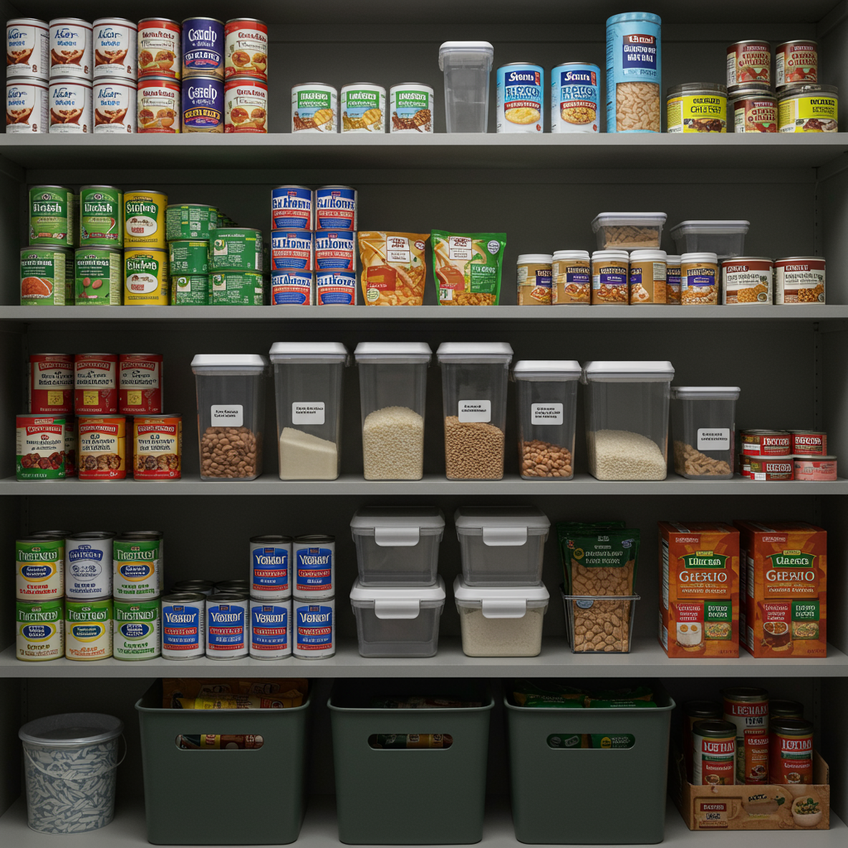
Your goal is to build a supply of food that requires no refrigeration and little to no cooking. Start by building a two-week supply and gradually expand it to three months or more if possible. Focus on these categories:
- Canned goods: Meats, fish, fruits, vegetables, and soups. They are durable and last for years.
- Dry staples: White rice, pasta, beans, oats, and flour. Stored properly in airtight containers, these can last for decades.
- High-energy foods: Peanut butter, nuts, protein bars, dried fruit, and crackers provide crucial calories.
For a family of four, a simple starting goal might be to aim for 28-30 cans of vegetables and 15-20 cans of protein (tuna, chicken) per week in your deep pantry. Remember to stockpile comfort foods like coffee, tea, and hard candy; they are excellent for morale.
Securing a safe water source and purification methods
You cannot survive without water. The standard rule is one gallon of water per person per day, for both drinking and basic sanitation. While you can store tap water in sanitized containers, you must have a plan for when that runs out.
There are three primary methods for water purification:
| Method | Effectiveness | Pros | Cons |
|---|---|---|---|
| Boiling | Kills virtually all pathogens (viruses, bacteria). | Most effective, no special gear. | Requires fuel, takes time, doesn’t remove sediment. |
| Chemical treatment | Kills most viruses and bacteria. | Lightweight, portable (tablets). | Leaves a chemical taste, less effective in cloudy water. |
| Filtration | Removes bacteria, protozoa, and sediment. | Improves taste, works instantly. | Can clog, may not remove viruses (check filter rating). |
Having multiple methods is the best strategy. A quality water filter combined with the ability to boil water covers nearly all scenarios.
Maintaining sanitation and hygiene to prevent disease
In a long-term crisis, disease can become a greater threat than the conflict itself. A breakdown in sanitation infrastructure can lead to the rapid spread of bacteria and illness. Your hygiene kit must include:
- Hand sanitizer (with at least 60% alcohol)
- Bar soap and liquid soap
- Feminine hygiene supplies
- Toothbrushes and toothpaste
- Heavy-duty garbage bags and plastic ties for waste disposal
If plumbing fails, you must create an emergency toilet. A simple bucket with a tight-fitting lid, lined with a heavy-duty garbage bag and a little kitty litter or sawdust after each use, can prevent the spread of disease in your shelter.
Essential medical skills: critical first aid when help isn’t coming
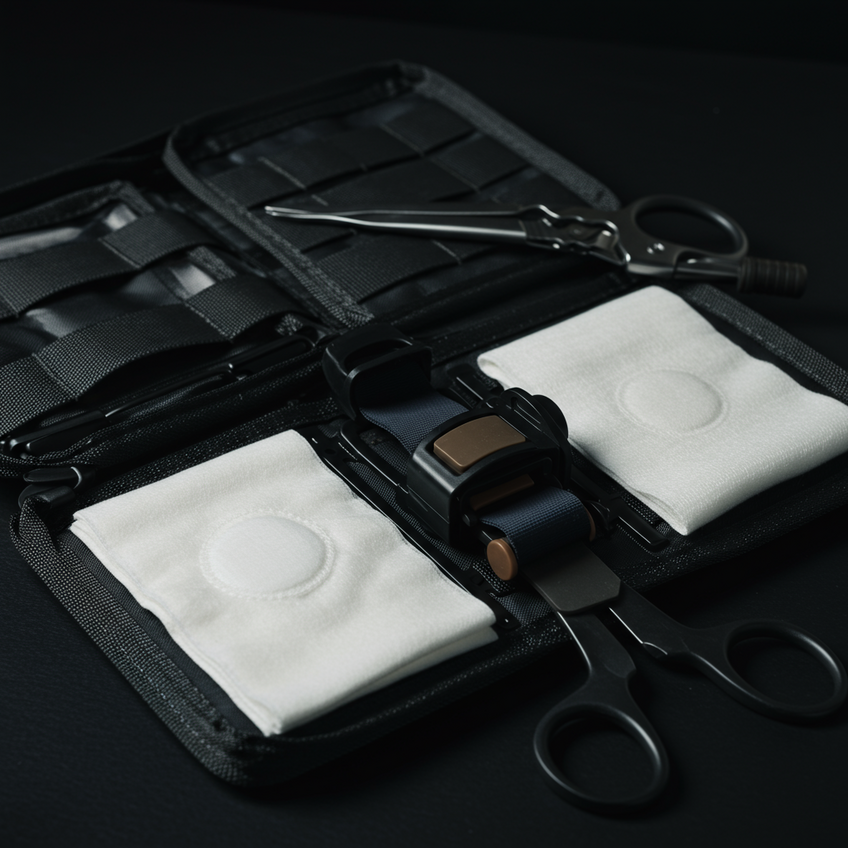
In a crisis, you are the first responder. Emergency services will be overwhelmed, and help may not be coming. Basic medical knowledge is not a suggestion; it’s a necessity.
Introduction to trauma care: the M.A.R.C.H. algorithm
As someone certified in First Aid and trained in emergency response, I can tell you that the single most important knowledge in a violent crisis is trauma care. In chaotic situations, responders use a simple acronym to prioritize actions and save lives: M.A.R.C.H.
- Massive hemorrhage: Stop severe, life-threatening bleeding first.
- Airway: Ensure the person has a clear, open airway.
- Respirations: Check if they are breathing and address any chest injuries.
- Circulation: Treat for shock and manage other, less severe bleeding.
- Hypothermia/head injury: Keep the person warm and check for head injuries.
This framework forces you to focus on the biggest threat first.
The number one skill: how to stop severe bleeding
Uncontrolled bleeding is the leading cause of preventable death in trauma situations. You must know how to stop it.
- Direct pressure: Using gloves if possible, take a clean cloth or sterile dressing and apply firm, direct pressure to the wound. Do not let up.
- Wound packing: If direct pressure isn’t stopping the bleed on a limb or junction (like an armpit or groin), you must pack the wound. Push sterile or clean gauze deep into the wound cavity until it is packed tight, then continue to hold pressure.
- Tourniquet application: For severe limb bleeding, a tourniquet is a life-saving tool. Apply it “high and tight” on the affected arm or leg, between the wound and the torso. Tighten it until the bleeding stops completely. It is critical to buy a reputable commercial tourniquet (like a CAT or SOFTT) and practice using it. A cheap, poorly made tourniquet will fail.
Building a dedicated trauma kit vs. a standard first-aid kit
Your standard first-aid kit with bandages and antiseptic wipes is for scrapes and minor cuts. A trauma kit, often called an IFAK (Individual First Aid Kit), is for saving a life. It is designed to treat the major injuries covered by the M.A.R.C.H. algorithm.
An effective trauma kit contains:
- Tourniquet: At least one, preferably two.
- Pressure dressing: An “Israeli” or emergency bandage designed to apply pressure.
- Packing gauze: Compressed or rolled gauze for wound packing.
- Chest seals: For treating sucking chest wounds.
- Trauma shears: To cut away clothing quickly.
- Gloves: To protect yourself.
Building this kit and learning how to use its contents is one of the most empowering steps you can take.
The mental battlefield: building psychological resilience for survival
Your mindset is your most powerful survival tool. Without psychological resilience, the best gear and plans in the world are useless. This is the aspect of survival that competitors often ignore, but it is central to true preparedness.
Acknowledge and manage fear: the S.T.O.P. technique
Fear is inevitable. Panic is a choice. When you feel a wave of fear or anxiety rising, use the S.T.O.P. technique:
- Stop: Pause what you are doing. Don’t react impulsively.
- Take a breath: Take a few slow, deep breaths to calm your nervous system.
- Observe: Look around you. What is actually happening, versus what you fear might happen? Acknowledge your feelings without letting them take control.
- Proceed: With a clearer mind, consult your plan and proceed with the next logical step.
The goal is not to eliminate fear, but to prevent it from hijacking your ability to think rationally.
Maintain routine, purpose, and a sense of normalcy
In a chaotic world, structure is sanity. Maintain a daily schedule as much as possible. Wake up at the same time, have designated meal times, and assign tasks. This creates a sense of control and predictability. Give everyone in the family, including children, a job to do. Whether it’s helping prepare food, organizing supplies, or standing watch, having a purpose fosters a sense of contribution and fights off feelings of helplessness.
Coping with traumatic events and maintaining hope
You may witness or experience things that are deeply traumatic. It’s vital to have basic coping strategies. Use controlled breathing to manage acute stress. Focus on the immediate, tangible task in front of you. Allow yourself and others to grieve, but don’t let it consume you.
Hope is not a passive wish; it’s an active survival strategy. Find small moments of positivity. Share a good memory. Listen to music on your hand-crank radio. Focus on the long-term goal: survival, recovery, and reunion. This forward-looking mindset is the fuel that will get you through the darkest days.
Information and community: your lifeline in a crisis
No one survives alone. Your ability to get reliable information and work with others is a massive force multiplier that dramatically increases your chances of survival.
Staying informed when the internet and power are down
Assume that your phone, internet, and television will not work. A hand-crank or solar-powered emergency radio is the single most reliable tool for receiving official news, instructions, and information. It requires no grid power and can keep you informed about safe zones, aid distribution points, and the overall state of the crisis. Be wary of rumors and propaganda, which run rampant in conflict. Stick to verified official broadcasts.
The power of community and mutual assistance
The “lone wolf” survivalist is a dangerous fantasy. A trusted, vetted group is infinitely more resilient than any individual. Your community allows you to:
- Pool resources: Share food, water, and supplies.
- Share skills: One person may have medical training, another might be a mechanic, and another may know how to garden.
- Provide security: A group can organize watches and provide mutual protection.
Start building this network now. Get to know your neighbors. Build relationships based on trust and mutual respect. As the core ICRC civilian protection principles show, community structures are essential for safety and the effective distribution of aid in any crisis. A strong community is your best defense.
Frequently asked questions about civilian war survival
What are the first things one should do if a war starts?
The very first things to do are to enact your family emergency plan, gather in your pre-determined safe location, and tune into official news sources via an emergency radio.
What should be in a survival bag for war?
A survival bag for war should contain at least 72 hours of essentials, including one gallon of water per person per day, non-perishable food, a comprehensive first-aid and trauma kit, a hand-crank radio, a flashlight, and copies of your essential documents.
Where is the safest place to shelter in a war?
The safest place to shelter is typically below ground in a basement or cellar, or if unavailable, in a central, interior room of your house with no windows and the fewest possible exterior walls.
How do you mentally survive in a war?
Mentally surviving a war involves managing fear through techniques like controlled breathing, maintaining a daily routine to create normalcy, focusing on a sense of purpose, and building a strong community support system.
What is the best food to stockpile for war?
The best foods to stockpile for war are those with a long shelf-life that require little to no cooking, such as canned meats and vegetables, rice, beans, pasta, peanut butter, and high-energy protein bars.
From anxious to prepared: you have a plan
True preparedness is not about fear. It is the calm confidence that comes from having a rational plan and empowering yourself with practical skills. It’s about knowing how to make your home safe, how to provide food and water for your family, how to manage a life-threatening injury, and how to lead with a resilient mind. You have now walked through the core pillars of that preparedness: an immediate action plan, a fortified shelter, long-term supplies, critical medical skills, and psychological strength. You are no longer just worried; you are informed and capable.
To help you take the first step, download our free, printable Go-Bag and Home Stockpile Checklist to begin building your resilience today.
 Rankenstein
Leave a comment